The maritime industry is currently undergoing its most significant hardware transformation since the shift from sail to steam. In the current economic context, and in light with the @IMO’s objectives towards 2050 decarbonization, the conversation is rightly dominated by optimised hull forms, dual-fuel engines, electrification or wind assisted propulsion systems.
But there is a growing gap. We are putting ultra-complex vessels into the water, ships designed to handle hybrid propulsion, variable drafts, and tight energy constraints, yet the philosophy of their control systems often remains rooted in the 2000s. Managing all these variables simultaneously is a huge challenge.
This is no longer just an efficiency issue; it is becoming a safety issue.
The crew under pressure
Seamanship relies on experience and intuition. This is the foundation of navigation and must remain so. However, the reality on the bridge has shifted.
Imagine navigating a large vessel through a busy strait at night.
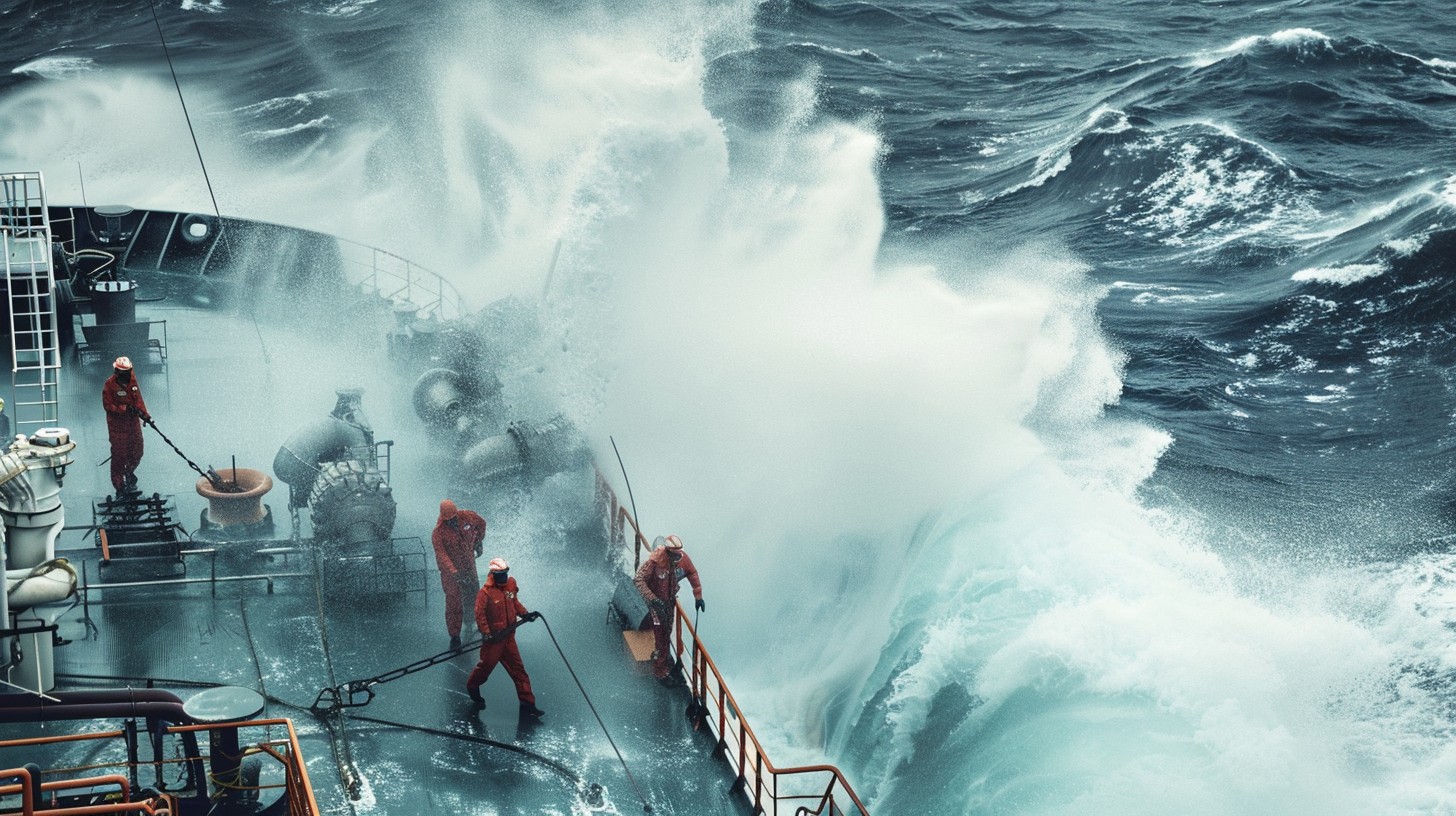
The weather is getting worse, with waves higher than predicted, a sign of the climate instability making the sea harder to read.¹
Suddenly, the bridge becomes a noisy environment fighting for your attention. An alarm triggers on the chart system (ECDIS) because of restricted waters approaching. A sensor warning lights up on the engine panel. At the exact same moment, the satellite phone rings: the shore office wants an immediate update on your arrival time, ignoring the storm you are fighting.
You are trying to dodge a fleet of small fishing boats that don't show up on your radar, while silencing alarms and answering to a Vessel Traffic Service on the VHF.
You are not just steering; you are filtering noise. You are processing all this in real-time, often with a smaller crew. The team’s capacity to pay attention to critical safety details is stretched to the limit.
This saturation helps explain why Allianz attributes up to 96% of accidents to human error.² It is rarely a question of incompetence. It is a question of fatigue and information overload.
In this context, relying entirely on manual methods is risky. We are asking officers to track too many variables, too fast, without enough support.
From passive monitoring to active protection
The industry needs to shift its perspective on what "navigation" means. It is no longer just about getting from A to B; it is about managing the dynamic interaction between a complex ship and a chaotic environment.
The difference lies in moving from passive systems to active, smart control.
A standard, passive system reacts to an error (e.g., the ship is 2 degrees off course, correct left"). It doesn't "know" the sea state; it simply fights it. Smart systems are predictive. They understand the vessel's specific behavior and the sea state. Instead of just fighting the waves, the system helps the crew work with them. It can for instance:
- Anticipate how the hull will interact with specific wave trains to prevent dangerous rolling or slamming.
- Calculate the precise steering and power needed, reducing unnecessary strain on the rudder and main engine.
- Protect sensitive cargo by suggesting slight course adjustments to smooth out acceleration forces.
These technologies augment the Captain's expertise. It provides the bridge team with the clarity and foresight they need to make the safest decisions, faster.
Supporting the seafarers of tomorrow
As we embark on 2026, the industry focus is naturally on regulatory compliance and new fuels. But let’s remember the fundamentals behind every transition. The most critical asset on board is still Human. Moving to digital navigation is not just about gathering data for shore-side reports. It is about equipping our crews with tools that match the sophistication of the ships they command.
We are giving them the best hardware. Let's give them the best intelligence to run it.
—
1Young, I. R., & Ribal, A. (2019). Multiplatform evaluation of global trends in wind speed and wave height. Science.
2Allianz Global Corporate & Specialty. Safety and Shipping Review 2025.


